Votre choix s’applique sur cette page, mais le navigateur n’a pas permis de l’enregistrer. Nous pourrons vous le demander à nouveau lors de votre prochaine visite.
▷Vidéo YouTube
Pour lire cette vidéo, activez les médias externes dans les paramètres des cookies.
80% – 90% of the work performed by your customer service team can be automated - and it's
surprisingly simple to implement.
In this short case study, I will demonstrate how our company uses CogniVis to implement such automations for
our
clients.
In short, our process involves three key steps:
Creating an AI Agent with Access to Customer Service Materials added to the Company's Knowledge Base
We develop an AI agent that has access to all relevant customer service materials, including FAQs, response
templates, problem-solving guides, product specifications, return policies, and more.
Integrating the AI Agent with the Chosen Communication Platform
The AI agent is seamlessly integrated with the client’s preferred platform, such as Amazon, eBay, Shopify,
traditional email, or any other customer communication channel.
Real-Time Analysis and Response Generation
Once connected, the AI agent analyzes incoming messages or the entire conversation history with a customer.
Based on this analysis and the information from the knowledge base, it generates a precise and context-aware
response.
The video below shows an example of such integration. Interestingly, AI can serve a customer in any language,
while
simultaneously preparing a draft message in a language that our human customer service understands.
In the example below, we see a message from a customer in German. Our AI agent uses it to create a draft response
in English (so that our customer service, who does not speak German, can verify the message), then adapts it
according to the command and finally translates it into the customer's language (i.e. German)
Detailed explanation
In today’s fast-paced digital landscape, customer service departments face increasing pressure to deliver quick,
accurate, and personalized responses to customer inquiries across a variety of platforms.
To address this challenge, we have developed an innovative AI-powered system designed to automate and streamline
customer service operations.
This system seamlessly integrates with any communication platform—whether it’s e-commerce platforms like
Amazon, eBay, Shopify, traditional email, or
any other channel used for customer communication.
By combining the power of artificial intelligence with a structured knowledge base, this solution revolutionizes
the way businesses interact with their customers.
For our clients, we automate customer service in the following way:
Building a Corporate Knowledge Base
We create a centralized, internal "Wikipedia" for the company, serving as a comprehensive repository of
information.
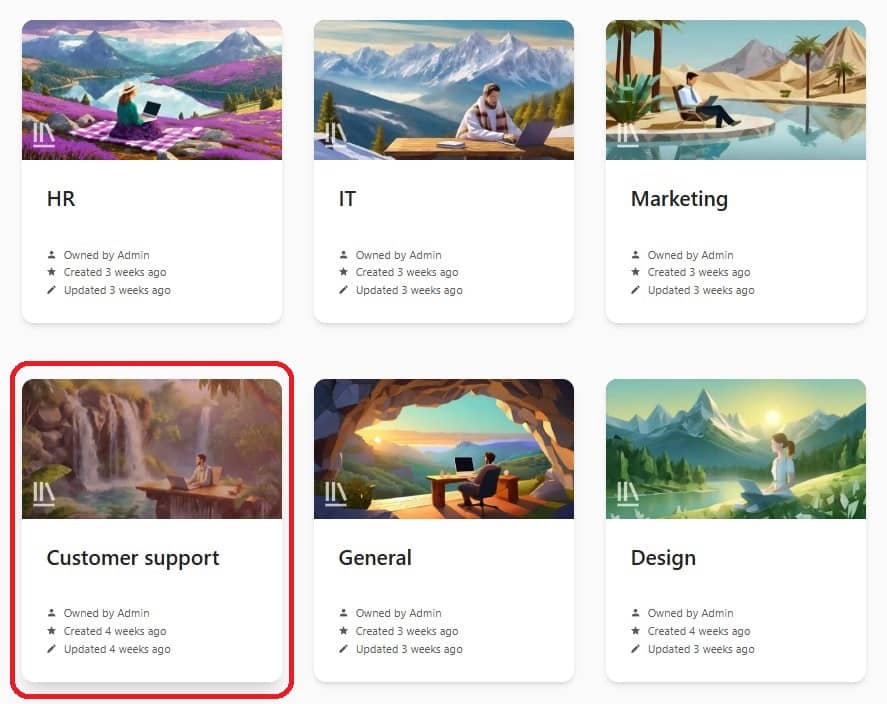
Dedicated Customer Service Section
Within this knowledge base, we establish a specialized section for the customer service department.
Populating the Knowledge Base
This section is enriched with all relevant materials, including:
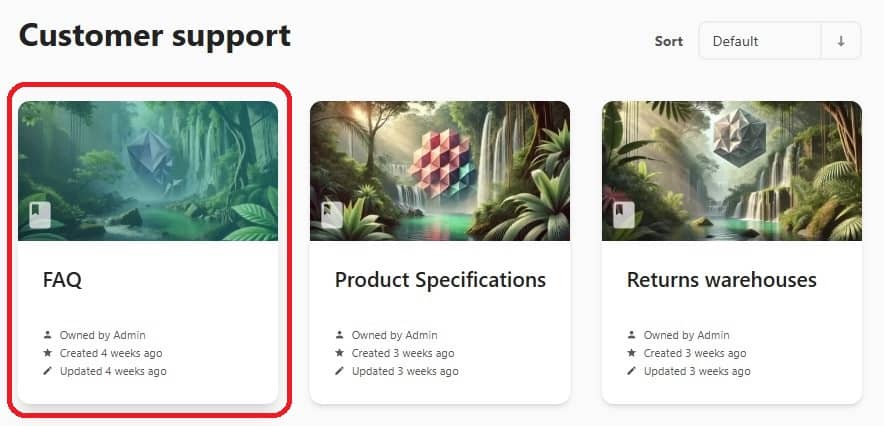
Frequently asked questions (FAQs)
Templates for standard responses
Descriptions of common problem scenarios and their solutions
Product specifications
Return policies
Any other relevant customer support documentation
AI Agent Development
We create an AI agent that is directly connected to the customer service materials in the knowledge base.
This ensures that every response generated by the AI is consistent with the company’s guidelines and
policies.
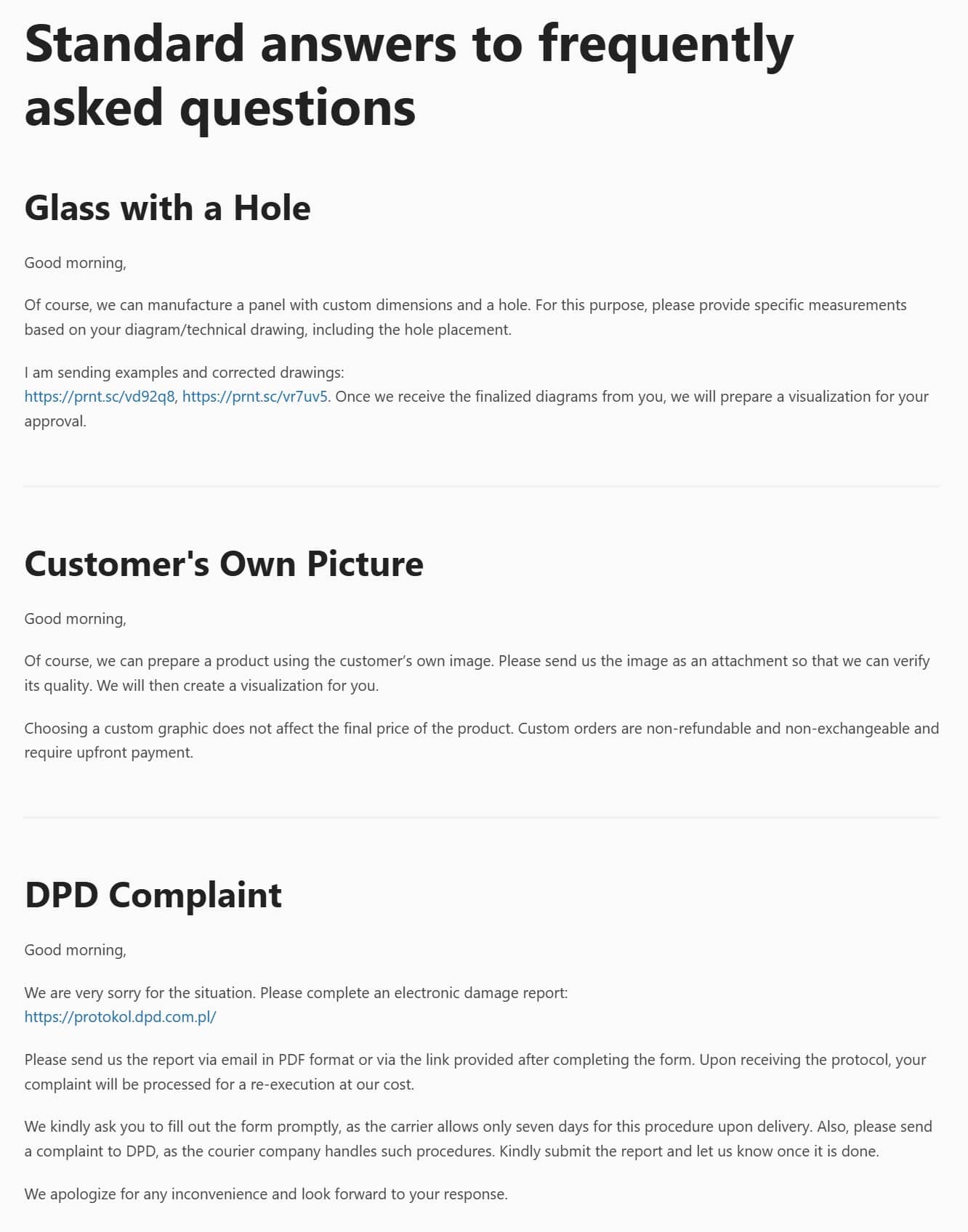
Example of standardized customer service office responses that serve as a data source for an AI agent.
An example of product specifications that also serve as data sources for an AI agent
Platform Integration
The AI agent is integrated with the client’s chosen platform, such as Amazon,
eBay, Shopify, traditional email, or any other
customer communication channel.
Real-Time Analysis and Response Generation
Once connected, the AI agent analyzes incoming messages or the entire conversation history with a customer.
Based on this analysis and the information from the knowledge base, it generates a precise and context-aware
response.
Human Oversight
Finally, a human agent reviews the AI-generated response, either approving it directly or making adjustments
as needed before it is sent to the customer.
This approach not only reduces the workload of customer service teams but also improves response times by
80-90%. Additionally, the AI agent consistently delivers highly accurate and effective solutions, outperforming
human agents in many cases and significantly boosting customer satisfaction.
How to implement it
Contact Michal Szymanski from EO Poland and he will guide you through the CogniVis AI implementation process.
Author of hundreds of articles on AI, programming, UI/UX design,
business, marketing and productivity. In the past, an educator working
with troubled youth in orphanages and correctional facilities.