
Hotel data in team chats is a real operational risk
Many hotels are unknowingly moving critical operational data into private messaging apps.
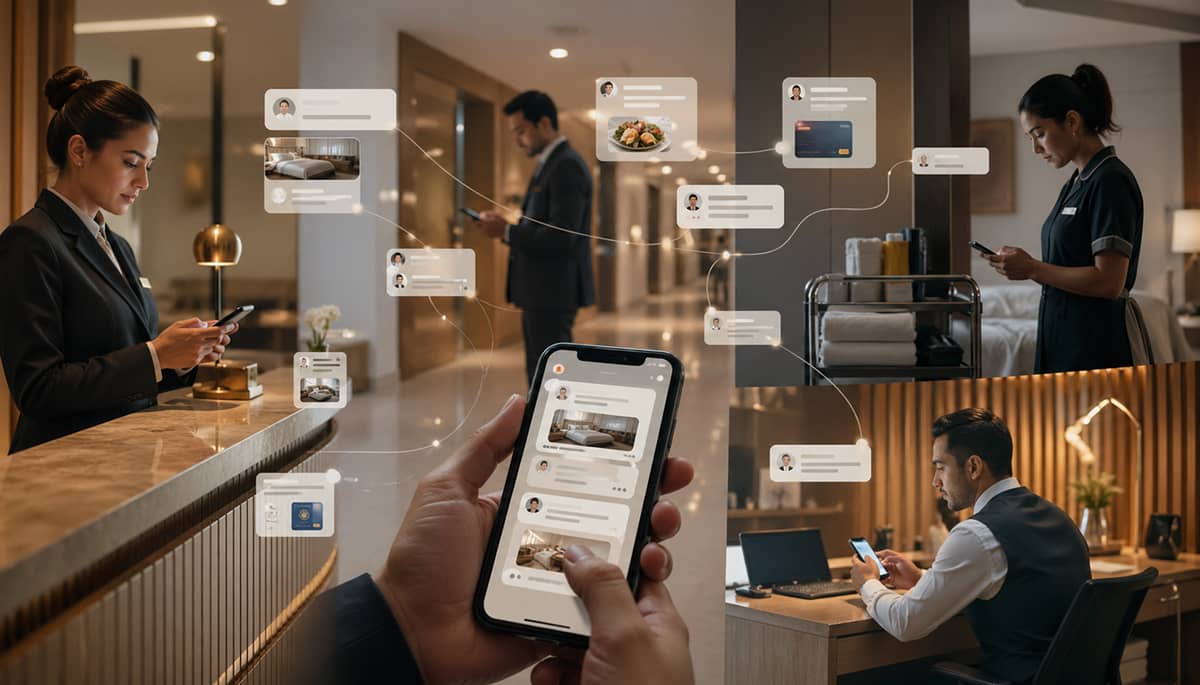
Table of contents
Introduction
In the fast-paced world of hotel operations, speed of communication is vital. This often leads to “Shadow IT,” where employees move work conversations to personal apps like WhatsApp or Messenger to get things done quickly. While convenient, this creates a massive security gap. Guest preferences, room codes, and even photos of IDs circulate in clouds that the hotel has zero control over.
This issue is particularly critical in the hospitality industry, which faces high staff turnover. When an employee leaves, they take their entire communication history with them—including sensitive operational data—stored permanently on their personal device.
Example: The Invisible Data Leak
Mark is the Front Office Manager at a boutique hotel. For the past two years, his team has communicated primarily via a WhatsApp group. It seemed like the perfect solution—free, fast, and everyone knew how to use it. The group was filled with photos of lost items, VIP guest requests, and maintenance issues.
When one of the receptionists, Anna, left to work for a direct competitor, Mark followed standard procedure: he revoked her PMS access and took back her keycard. However, he forgot one thing: Anna still had a year’s worth of chat history on her phone. She had access to regular guests’ phone numbers, specific guest requirements, and a contact list for all the hotel’s suppliers. The hotel had no technical way to remotely wipe this data from her personal device.
The Turnover Problem: Loss of Intellectual Property
In hospitality, where turnover rates are among the highest in the labor market, operational data becomes “fluid.” Every departing employee is a potential data leak point if communication isn’t kept within a secure, corporate ecosystem.
Personal devices do not allow administrators to manage content. When an employee leaves, standard offboarding (like disabling an email account) doesn’t touch the chat archives on their phone. In practice, the hotel regularly loses control over its processes and guest insights to third parties.
Impact on Asset Security:
- No Access Control After Termination: Hotels cannot wipe chat histories on a former employee’s phone, leaving sensitive data in unauthorized hands.
- Fragmented Guest Knowledge: Instead of building a knowledge base in a CRM or PMS, valuable insights into guest preferences remain trapped in private chat threads.
- Internal Contact Leakage: Personal phone numbers and contact details of the entire team are available to anyone who was ever a member of the group, making “staff poaching” easier for competitors.
Legal Risks and Compliance (GDPR)
Using consumer messaging apps for business purposes often directly contradicts GDPR and other privacy regulations. As a data controller, a hotel is obligated to know where data is stored, who has access to it, and how it is processed.
In the event of a guest dispute or a regulatory audit, a hotel relying on personal chats cannot provide a full audit trail. It’s impossible to prove who viewed a guest’s personal data or whether it was deleted in accordance with the “right to be forgotten.”
Legal and Compliance Perspective:
- Lack of Data Processing Agreements: Hotels typically don’t have the necessary legal agreements with providers like Meta (WhatsApp) to use these tools for processing guest data.
- Audit Impossibility: If a security incident occurs, IT cannot trace the path of the leak, exposing the hotel to significant financial penalties.
- Terms of Service Violations: Most consumer app terms of service prohibit use for commercial data transmission without specific business licenses.
Impact on Operational Efficiency and Profit
While WhatsApp seems free, the hidden operational costs of information chaos are enormous. Personal messaging apps lack task structures, deadlines, and accountability features.
Information in chat groups gets buried quickly. A guest’s request for extra towels sent at 2:00 PM can be covered by dozens of other messages by 6:00 PM, leading to service failures and lower scores on Booking.com or TripAdvisor.
Impact on Operations and Finance:
- Operations (Front Office / Housekeeping): A lack of task statuses (e.g., “in progress,” “completed”) causes employees to duplicate work or miss requests entirely.
- Guest Experience: Delays caused by “missed” messages directly translate to lower loyalty and poorer online reviews.
- Management and HR: Managers lose visibility into real team performance, lacking analytics on response times or resolution rates.
How to Regain Control Over Your Data?
The solution isn’t to ban digital communication, but to implement enterprise-grade tools designed for hospitality. Professional internal communication platforms combine the convenience of chat with corporate-level security.
Moving to dedicated tools allows for data centralization and operational structure. In these systems, every request is measurable, and access is strictly tied to an employee’s role and current employment status.
Technology and Management Perspective:
- Centralized Account Management: One click in the admin panel cuts off a former employee’s access to all hotel resources, protecting communication history.
- Separation of Personal and Professional Data: Employees are often happier using a dedicated app, knowing their personal conversations remain private and separate from work.
- Analytics and Optimization: Managers gain access to data regarding department workloads, allowing for better scheduling and reduced labor costs.
Summary
Data is now one of a hotel’s most valuable assets. Allowing it to “leak” through private communication channels is a risk that a modern property cannot afford. While changing team habits can be a challenge, the benefits—legal security, intellectual property protection, and increased operational efficiency—are indisputable.
Investing in professional communication infrastructure is more than an IT upgrade; it’s a strategic business decision that protects your hotel’s reputation and builds a foundation for modern, data-driven management.

Michał Szymański
Co-founder of technology companies MDBootstrap and CogniVis AI / Creator of Longevity-Protocols.com / Listed in Forbes '30 under 30' / EOer / Enthusiast of open-source projects, fascinated by the intersection of technology and longevity / Dancer, nerd and bookworm /
In the past, a youth educator in orphanages and correctional facilities.